Showing posts with label Yellow Hammer. Show all posts

Tuesday, 9 February 2016

Preparation for the 2016 Big Farmland Bird Count!

For the third year in a row the Game and Wildlife Conservation Trust is running its Big Farmland Bird Count. It's a great opportunity for land owners, farmers and anyone connected with the countryside to get out and count the wonderful array of species that live in our beautiful countryside.  For 30 minutes between the 6th and 14th of February the idea is to get a 30 minute snap shot of what species are on our farms.  The data can then be sent to the GWCT to give a national picture of how these import species farmland bird species are benefiting or otherwise from our countryside management. Are the numbers increasing or decreasing it's very important that we can identify these trends and act accordingly.  Now I for one, am not a brilliant birder or twitcher but I know a man who is!  On a very sunny day last week we hosted a Farmland Bird Identification training session at Overbury sponsored  by BASF with expert training from Peter Thompson.
We had a fantastic turnout with nearly 30 people, starting in the village hall, to hear about the different species of bird, the nesting habitat they need and the food sources for adults and chicks.  After a great lunch we headed out for a bit of a ramble around the vale farm to see what species we could identify.  Considering the noise, chatter and wind I think we did rather well.  In total we spotted 28 different species, many of which are target BAP species (Biodiversity Action Plan) meaning they are under special priority measures to try and look after them.  Many of the Higher Level Stewardship options we have taken up are being used to encourage these species.  Options such as grass margins, unharvested and unfertilised headlands, wild bird mixes, skylark plots and some fallow patches are all important to create habitat and food sources for these birds.  We looked in hedgerows, on grassland, over water, on farm tracks, adjacent to field margins, in arable fields and across game covers to see what was on show.  Eyes and binoculars were pointing in all directions and here's the species list on show that day. We spotted mallard, coot, heron, robin, dunnock, wren, pied wagtail, blackbird, song thrush, redwing, fieldfarerook, jackdaw, carrion crow, magpie, raven, buzzard, sparrow hawk, yellowhammer (one of my favourites), goldfinch, linnet, chaffinch, skylarkblue tit. great tit, long-tailed tit, pheasant and red-legged partridge.  We are heading out on Thursday morning to put our new identification skills to the test to see if we can beat this impressive list of species.  Many thanks to Peter, to the GWCT and BASF for the event sponsorship as this training will last much longer than just a day in February.  I would encourage everyone who can take part to get out, count some birds and upload the results. It's a very important source of information, helping to prove that we are looking after and enhancing the environment in which we live and work!

Tuesday, 7 August 2012

Yellow Hammer Heaven

Earlier in June John Clarke was out looking at the stewardship margins that have been left to self seed this year with arable wild flowers.  In addition to a host of very interesting species including meadow buttercup, field and long headed poppy, white campion, venus looking glass, scented mayweed, pineapple weed, field gromwell and cornflowers he also stumbled (almost) on a Yellow Hammer Nest.  It is quite rare for these little birds to nest on the ground, especially adjacent to a bridleway that is heavily trafficked with walkers and their roaming dogs!  It was a real treat to have established an area for wildlife and for them to actually use it!  I guess they felt secure in the thick wild flower cover and there must have been an abundance of food.  Even this summer there were lots of insects feeding on the wild flowers, themselves being a taste snack for the farmland birds in the area.
This is where the nest was and as you can see it was a really lucky find.  The nest wasn't disturbed and hopefully the eggs would have hatched.  Judging by the large numbers of Yellow Hammers there this morning, the population in this small part of England is turning more yellow, if not Gold!

Monday, 26 September 2011

Stewardship Update

I thought that I would just take a quick moment to update you on how the various stewardship options have progressed over the dry summer.  On the whole most seemed to have coped very well although some species have rather taken over!  This first wild bird seed mixture is the Norlands field and was planted with feeding Tree Sparrows through the winter months.  The plants include the wonderful Quinoa whose magnificent autumn colours look a real picture at this time of year.  They will produce a vast amount of small seeds from Christmas onwards.

In this field we have planted a pollen and nectar strip next to a winter bird seed mixture aimed at providing nesting cover and food for corn buntings. The mustard that we planted seems to have overtaken the rest of the seed mix which includes, spring barley, triticale and white millet.  Next year I think I will reduce the mixture from 10 to 5%, although who knows in a different spring 10% might have been the right amount.


This is one of my favourite stewardship margins and one that has already produced a real bounty of winter food.  Both of these mixtures were planted before we entered the Higher Level Stewardship and last year the bird food mix fed lots of small birds, including yellow hammers, dunocks and linnets through the winter period.  What I love about this combination of pollen and nectar and wild bird food is the way that it caters for our farmland wildlife completely.  It provides winter food for adult bird survival, pollen and nectar for insects to live on which then become chick feed and there are nesting sites in the tussocky grass margins and hedge bottom on the right hand side.  It will be fascinating to watch these sights develop over time and hopefully reap the benefits for our farmland wildlife.

Monday, 24 January 2011

Seed Selection


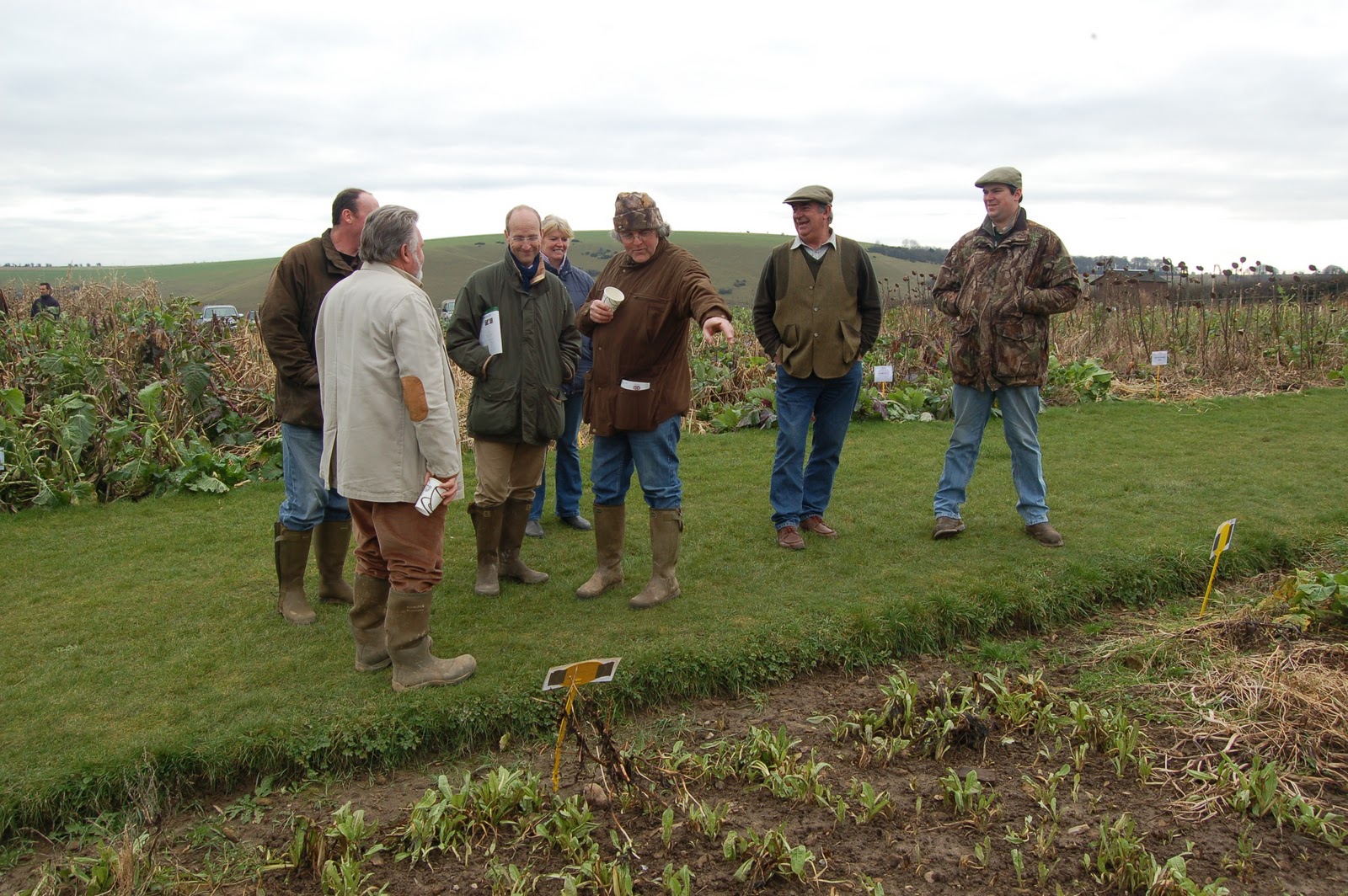
Today Paul Gillet and I went to see some game cover and stewardship seed mixtures sold by David Bright Seeds  Paul is the Head Keeper at Overbury and together we wanted to go down and have a look at different mixes of seed after the hard winter weather we have been having.  This would help us determine if there are any new varieties or species we should be trying that will stand up better to the cold weather.
Much of the grain maize was still standing, as was the cobless maize but much of the forage maize was flat.  We looked at varieties of sorghum, millet (red and white), kale, mustard, turnips and a host of other species of planted, all designed to either feed or provide cover (shelter) for game birds, with benefits to other species.

Having just been accepted into the Higher Level Stewardship Scheme, I was keen to look at different seed mixtures aimed at providing feed and cover for our 6 target wild birds (Grey Partridge, Lapwing, Turtle-dove, Skylark, Yellow Wagtail and Trees sparrow).  We saw mixes for yellow hammer and tree sparrow, both of which we have tried here at Overbury, containing mustard, mixed millet, spring wheat, spring barley and fodder raddish.  Lots to think about and plan for ready for planting this spring.

Friday, 28 May 2010

Beetling About

Earlier this year we decided to plough up about 0.5ha of winter beans in order to establish a beetle bank and some extra winter bird mix area. The beetle bank will protect the wild bird feed area, incorporating a game strip from the activities going on in the field. I walked up and down the strip hand sowing grasses such as Timothy and Cocksfoot which will provide a great nesting habitat for the birds. The beetle bank as it's name suggests will also provide a wonderful home for many beetles and insects which in turn will provide food for creatures higher up the food chain. This mixture is called 'Yellow hammer Mix' and includes, mustard, spring wheat, mixed millet, triticale, spring barley and fodder radish. It will of coarse provide food for many more birds not just the Yellow Hammers.

The reason for this trial is to learn about growing these mixed crops as we are preparing our HLS scheme application which will include some areas of the farm dedicated to growing crops to feed birds. Now all we need is some nice warm rain to get the crops established!