Showing posts with label skylark. Show all posts

Wednesday, 22 June 2016

Life on the Margins

It's amazing what you can find while having a quiet wander along the side of the beautiful flower margins on the top of Bredon Hill at the moment.  Many are situated along side public rights of way so there's no need to trample across farmland to view them.  They are created by cultivating the soil to stimulate the wild seeds to grow that have been dormant in the soil for many years.  But the wild flowers are only part of the benefits, the flowers also encourage millions of insects that in turn provide valuable feed for young farmland birds.

The list of spices very evident is long, from bumblebees, butterflies, hoverflies, beetles and other pollinator species.  There were also many insect feeding birds such as Skylarks, Yellow Hammers, Goldfinches Meadow Pipits and Linnets, all feeding in the margins and carrying the feed out into the fields or up into neighbouring trees or hedges, where their nests are located.  You may have seen the small bare patches that have no crop in them which provide landing areas for Skylark and today they were singing with joy, that the sun had finally appeared!
Not all of the margins are this successful; in other margins we have had to mow the margin to stop the weed seeds from becoming fertile and adding to the weed seed bank, which is necessary for the long term benefit of the strip.  We hope that you enjoy walking on the hill and looking at what nature is providing and in order to enhance the benefit please do not let your dogs disturb the birds busily collecting feed for their young, by keeping them under very close control or ideally on a lead.

Tuesday, 9 February 2016

Preparation for the 2016 Big Farmland Bird Count!

For the third year in a row the Game and Wildlife Conservation Trust is running its Big Farmland Bird Count. It's a great opportunity for land owners, farmers and anyone connected with the countryside to get out and count the wonderful array of species that live in our beautiful countryside.  For 30 minutes between the 6th and 14th of February the idea is to get a 30 minute snap shot of what species are on our farms.  The data can then be sent to the GWCT to give a national picture of how these import species farmland bird species are benefiting or otherwise from our countryside management. Are the numbers increasing or decreasing it's very important that we can identify these trends and act accordingly.  Now I for one, am not a brilliant birder or twitcher but I know a man who is!  On a very sunny day last week we hosted a Farmland Bird Identification training session at Overbury sponsored  by BASF with expert training from Peter Thompson.
We had a fantastic turnout with nearly 30 people, starting in the village hall, to hear about the different species of bird, the nesting habitat they need and the food sources for adults and chicks.  After a great lunch we headed out for a bit of a ramble around the vale farm to see what species we could identify.  Considering the noise, chatter and wind I think we did rather well.  In total we spotted 28 different species, many of which are target BAP species (Biodiversity Action Plan) meaning they are under special priority measures to try and look after them.  Many of the Higher Level Stewardship options we have taken up are being used to encourage these species.  Options such as grass margins, unharvested and unfertilised headlands, wild bird mixes, skylark plots and some fallow patches are all important to create habitat and food sources for these birds.  We looked in hedgerows, on grassland, over water, on farm tracks, adjacent to field margins, in arable fields and across game covers to see what was on show.  Eyes and binoculars were pointing in all directions and here's the species list on show that day. We spotted mallard, coot, heron, robin, dunnock, wren, pied wagtail, blackbird, song thrush, redwing, fieldfarerook, jackdaw, carrion crow, magpie, raven, buzzard, sparrow hawk, yellowhammer (one of my favourites), goldfinch, linnet, chaffinch, skylarkblue tit. great tit, long-tailed tit, pheasant and red-legged partridge.  We are heading out on Thursday morning to put our new identification skills to the test to see if we can beat this impressive list of species.  Many thanks to Peter, to the GWCT and BASF for the event sponsorship as this training will last much longer than just a day in February.  I would encourage everyone who can take part to get out, count some birds and upload the results. It's a very important source of information, helping to prove that we are looking after and enhancing the environment in which we live and work!

Monday, 24 January 2011

Seed Selection


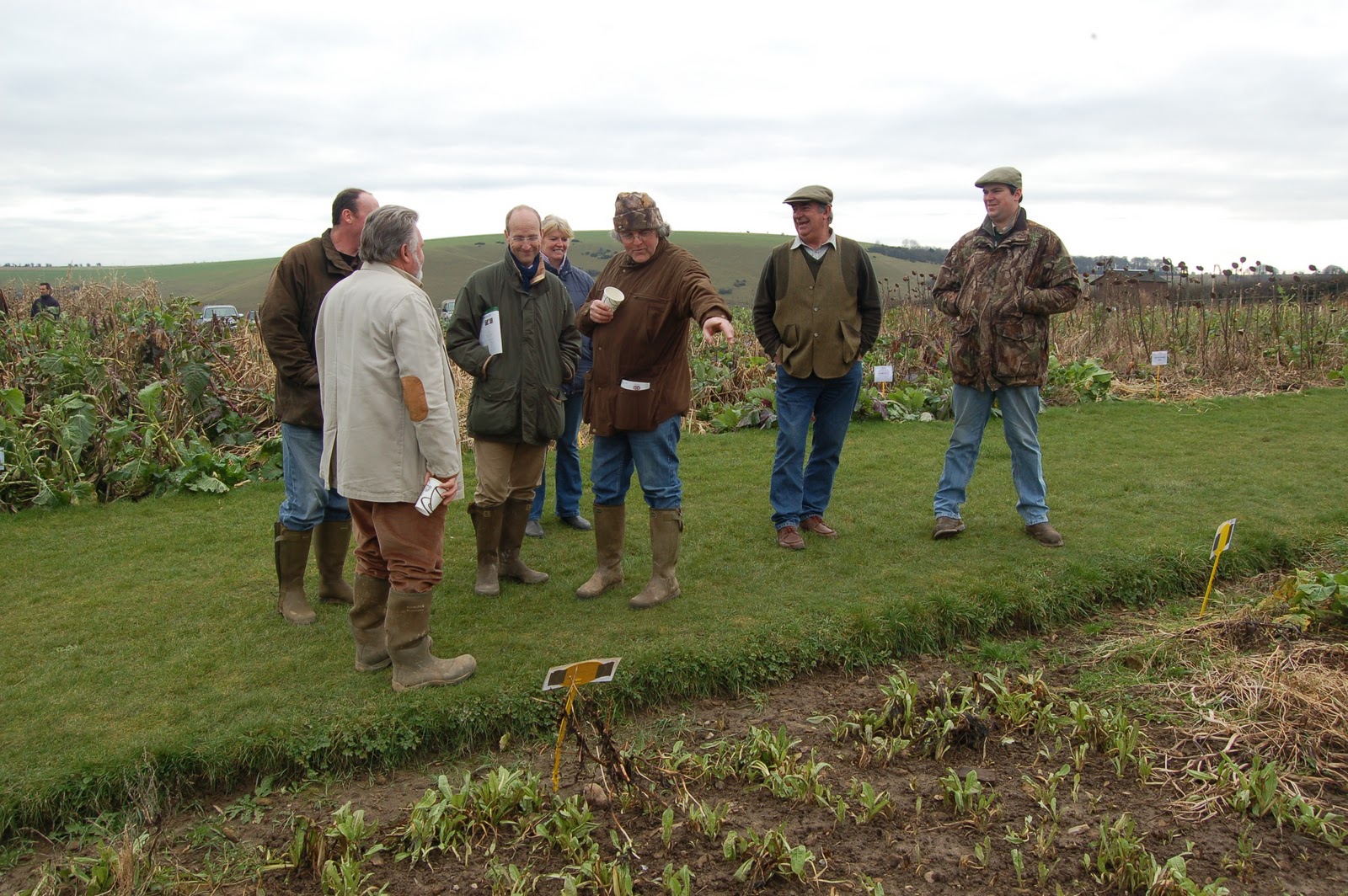
Today Paul Gillet and I went to see some game cover and stewardship seed mixtures sold by David Bright Seeds  Paul is the Head Keeper at Overbury and together we wanted to go down and have a look at different mixes of seed after the hard winter weather we have been having.  This would help us determine if there are any new varieties or species we should be trying that will stand up better to the cold weather.
Much of the grain maize was still standing, as was the cobless maize but much of the forage maize was flat.  We looked at varieties of sorghum, millet (red and white), kale, mustard, turnips and a host of other species of planted, all designed to either feed or provide cover (shelter) for game birds, with benefits to other species.

Having just been accepted into the Higher Level Stewardship Scheme, I was keen to look at different seed mixtures aimed at providing feed and cover for our 6 target wild birds (Grey Partridge, Lapwing, Turtle-dove, Skylark, Yellow Wagtail and Trees sparrow).  We saw mixes for yellow hammer and tree sparrow, both of which we have tried here at Overbury, containing mustard, mixed millet, spring wheat, spring barley and fodder raddish.  Lots to think about and plan for ready for planting this spring.

Thursday, 29 April 2010

Arable Bird Survey


Today I went out on our arable bird survey walk around with John Clarke and his wife Pamela. The walk takes us to 3 areas of the farm, that we walk through about 3 times a year to see what bird species we are able to identify. We are specifically looking for farmland bird species including; skylark, lapwing, yellow hammer, turtle dove, but all species of note are recorded. Today we spotted; skylark, lapwing, reed warblers, black caps, sedge warblers, reed buntings, yellow hammers (on our cultivated margin- result) linnets and a few others. These records should help us in collating information to enhance our HLS (Higher Level Stewardship ) application at the end of May.
Today we had a brilliant find in one of the fields Pamela actually discovered a skylark nest which is amazing. I found one about 5 years ago and have waited to find another since then. We have always had skylark but locating the nests is very rare, so it was a complete joy to find one today and here it is for you to take a peak at. Here is a shot of a lapwing on patrol near a nest in one of the sites we manage specifically for this species, very rare in Worcestershire.