Showing posts with label higher level stewardship. Show all posts

Tuesday, 22 October 2013

Cover Up or Laid Bare?

One of the key messages I have learnt from my Nuffield travels this year has been the need to look after  and feed the soil whenever possible.  This is fundamental to the farming system here in the UK.  If we look back 10,000 years the country was covered in trees and grasses; fields weren't created and there was no bare land.  It had something growing on it all of the time and this is what I feel we have to recreate now.  The soil is alive, or at least it should be.  It should be alive with bacteria, fungi and worms constantly re-cycling dead and decaying matter to release nutrients that we can then recycle.  With this in mind, the area of land going into spring cropping that doesn't not have a cover crop on it is down to the bare minimum 30Ha that we have as part of our Stewardship Agreement.
The picture below shows a field that has been split with two scenarios.  Half is in cover crops and half has been left as over winter stubble; although we had to do a light cultivation to get anything to green up.  Modern combines do not leave much grain behind.  The field will be direct drilled with spring barley next year and I can't wait to see what difference the cover crop will have made to the soil health, friability and structure.  Will it warm and dry faster with a crop on it?
The mix contains mustard, to produce organic matter, peas to fix a little nitrogen; oats, forage rye and volunteer wheat to mop up residual nitrogen, fodder radish to push tap roots into the soil and reduce compaction and turnips, just in case we run some sheep over the field.  I have a few observations so far that I would like to share.  The crop needs to be established as soon as the combine leaves the field to maximise the moisture left in the soil.  Any soil surface exposure to sunlight and no crop cover and vital moisture is rapidly lost.  This was a lesson learnt in Oklahoma where a second crop of sesame was being planted directly into wheat stubble in 45 degree heat!  Where the soil is moved we are getting a nice germination of weed seeds as well, so there is a nice flush of black grass and brome, all adds to reducing the seed bank in the top few inches of soil.  The field also walks well, it's hard to describe but it appears to have a cushioned effect, that can only be the organic matter that later will be returned to the soil.  Did you know that a 1% increase in organic matter in the top 6" of top soil means an additional 27,000 gallons/acre can be stored?  Well it's true, meaning that periods of dry weather will have less impact on our potential yields, especially on lighter, thinner soils.  I'm not expecting a fix in a year but over a rotation we should start to see a difference.  A more volatile climate is something that we should expect more often and we need to make plans to have a more resilient farming system. Prof Sir Brian Hoskins only mentioned last night at the Sainsbury's and Grantham Imperial College Lecture that temperatures could rise between 2-4 degrees by the end of the century, this will only cause more volatility in the climate, causing more weather extremes.  Last year for example 3,200 of the 5,000 weather stations in the United States recorded a record weather event  e.g. highest temperature, lowest rainfall, highest rainfall etc.
Another key benefit is the stabilisation of the soil.  All of the roots actively growing through the periods of heavy rainfall and the canopy above, shielding the soil surface will reduce water run-off and increase filtration rates.  Reducing run-off keeps soil particles in the field where they belong but also keeps phosphate fertiliser and any residual pesticides in the field rather than in the local stream.  I haven't even mentioned the amount of carbon that is being sucked out of the atmosphere and stored in the soil,  hopefully helping to turn around the recent losses of organic matter levels in the soil. Which ever way you look at it there are many positives.  But what are the negatives?  Well I guess there is the cost of the seed and establishment which when added together could be in the region of £80/Ha.  There is also the requirement for extra labour, and potentially machinery, at an already busy time of year when everyone is focused on the harvest. Do the positives out way the negatives?  Well it's early days but I would have to say that so far they do.  Are we creating a longer period for slugs to breed and feed?  Are we continuing the 'green bridge' and providing habitat for aphids transmitting BYDV (Barley Yellow Dwarf Virus) or too many brassica's potentially increasing the risk of club root?  Time will tell but as always with farming it's a long term game and there are many obstacles in the way before the results will be shown.  What I am certain of is that building soil carbon and reducing the level of tillage (cultivation) will, overtime increase the crop yields and reduce the variability of production and that can only be beneficial.

Tuesday, 22 May 2012

Shooting Wildlife


Over the last couple of days I have carrying my camera around to try and capture some of the wildlife that I am seeing around the farm at the moment. This lovely spell of warm weather is really bringing the wildlife out to enjoy it as much as I am. The picture (above) about shows 7 Brown Hares (BAP Species) adults and young all enjoying the morning sunshine on a recently mowed pollen and nectar mix. The area measures 0.70 Ha and is really crammed with wildlife. The hares were enjoying the shelter of the Oilseed Rape should any predators pass by.
Up on the top of Bredon Hill our resident herd of Fallow Deer are also basking in the sunshine. These are young males that gather together at this time of year. This field hasn't been planted yet as it is part of the hand picked peas operation and will be planted in June.

This little guy was probably the best find of the day (and his 3 other siblings). The Lapwing parents were getting very cross with me as I sneaked up to take the picture of a young Lapwing chick foraging for insects in a flooded part of a wheat field. It's an area of very poor drainage and under the Higher Level Stewardship Scheme I have plans to put a pond here but I might just excavate the scrape more to provide lots of wet feeding grounds for the next generations of lapwings.


Thursday, 22 March 2012

Hartpury Day Trippers

On Tuesday this week we entertained a group of final year students from Hartpury College.  It was a double act between Alex Milne, the Overbury Estate Manager and me.  The group consisted of Equine, Countryside Manager and Agrics, so a great mix of different interests, right up our street.  After a quick introduction it was all aboard our trailer and off to the Overbury Grasshoppers nursery school.  Alex spoke about the village residential and business portfolio and how the farm and estate interact on different projects.  Then we met Kathrine for an introduction to the Overbury Stud and how a stud farm works.  It's such a scientific business, I always end up learning something myself!
We then headed up the hill and stopped overlooking the Vale of Evesham, see above, where we spoke about the arable unit, irrigation, rotations, Integrated Farm Management, Woodland, Management, varieties of wheat and how the machinery fits into the system, it was a long stop that provoked much discussion.  Following on we headed to one of  the many conservation areas where our Higher Level Stewardship Scheme is starting to deliver real benefits to our local bird populations, not to mention how our flora is developing in both the grassland systems and in the arable crops.
By now we were running late so we popped into the sheep unit to talk about how they integrate into our farming systems and our relationship with Sainsbury's, before heading down the hill and away.
I hope we managed to generate some interesting thoughts and ideas for the next generation heading through the college ranks, we certainly enjoyed the trip and await next years group!

Wednesday, 15 February 2012

Conservation Grade Student

Yesterday I travelled to Royston in Hertfordshire for an Induction Day into becoming a farmer growing 'Conservation Grade' milling wheat for this years harvest. The training took place at Thrift Farm and is owned by Robert Law Robert has been one of the pioneers of Conservation Grade (CG) cereals, growing Oats for Jordans and as one of the 80 or so CG, growers has dedicated 10% of the arable area of the farm to wildlife.
The day started with an induction about CG from Brin Hughes about how the organisation started and what the aims are.  In a nutshell the idea is to grow food for people and wildlife on the same farm, whilst getting a premium from the customer for the nature friendly production methods (very important!)  In essence the farm needs to provide varying degrees of habitat and food sources for different insects, mammals and birds made up of specific types.  4% must be in Pollen and Nectar Mixes, 2% on Wild Bird Food, 2% in fine tussocky grasses and the final 2% in other habitats, such as hedgerows, ditches, watercourses, woodland and ponds.  These percentages work in nicely for us with our Higher Level Stewardship Agreement.  A farm map is also needed to help the assessor when being audited, once a year.  Within two years there is a habitat assessment to ensure all of the habitats we say we've planted have been done and managed accordingly.
We had a great talk by Peter Thompson from the Game and Wildlife Conservation Trust all about habitat selection for targets species.  First you need to know what species you have then you need to sort out the habitats.  Where to sight them, what to grow in the them, how to establish them and their following management.  All these snippets of information are so valuable when trying to plan these additions around the farm landscape. As Robert said "its easier to manage 500 acres of wheat than 60 acres of bird food".  I think that sums up the philosophy of these guys willing to go the extra mile for conservation and taking pride in the food that they grow, for people and wildlife.
We saw one of Roberts new barn Owl Boxes and heard about the Nature Friendly Owls project.  These birds are at the top of the food chain on our farms and if they are thriving then its a very good sign that those below them are also doing very well indeed.  In all I had a great day and I am looking forward to working with these farmers in the future, which can only be good for our business and also for our wildlife.  I can't help thinking that there are so many similarities and passions that CG farmers have with LEAF Farmers that there isn't some way of linking the two organisations together in some way?  We'll as the nubie of the group I'll leave that one quietly on the back burner for now, but leave you with a quote from Sir David Bellamy.
 "It's not just nature that benefits from Conservation Grade, we all do.  We see more birds and more bees and hear more buzzing and bird song.  On these farms we can start to enjoy the countryside again".  Keep watching and listening to hear how we get on.

Friday, 10 February 2012

Bustling Bramblings

For about the last 6 weeks or so we have had a great flock of LBJ's (Little Brown Jobs) feeding on one of our Higher level Stewardship bird food mixes.  The plot is quite large which is great for these smaller birds offering lots of protection, hidden away in the middle of their very own dinner table.  The size of the block (5acres) is also able to sustain larger numbers of birds for longer periods of time which is another benefit, so they're not using up energy searching out their next meal.  There is also less 'edge effect' of reduced seed yield, usually caused by rabbits nibbling away at the edges.
This mixture consists of Spring barley (60%), Tricticale (15%), Millet (10%), Fodder Raddish (5%) and Mustard (10%), although due to the dry summer when the crop was planted there seems to be a greater percentage of mustard that has survived!
The vast majority of these birds are Bramblings although there are a few Linnets and Chaffinches joining in the flock.  Having walked through the crop to take some video footage here of the flock swooping around there is still some seed left that has not shed yet so I hope that this bird table will continue to deliver the goods for a few weeks to come, while the winter weather is upon us.

Tuesday, 20 December 2011

Pears for your Heirs

Last week we started our programme of fruit tree pruning in the Conderton Orchard under our Higher Level Stewardship Scheme Capital works programme.  The orchard has had little attention for a number of years and the trees are very old and fragile, but really in need of some TLC to preserve their lives (and as a habitat) for as long as possible.  As this orchard is being used by COCO (Conderton and Overbury Community Orchard) I though that we would target those trees that were potentially unsafe and those that were already dead. 
After the dead trees had been re-modelled, the timber that was cut off, was left next to the trees. This meant that it would continue to provide a habitat for bugs, insects, beetles and fungi that were already present in the wood.  This re-modelling was aimed at making the trees more stable in high winds so that they would remain upright as long as possible.  Where wood was removed, say from a branch leaning right over, the stump was trimmed with a 'Coronete' cut to make it easier for insects to access the dead wood, as shown below. 

After the most urgent trees were trimmed up Tim and Simon from Treeessence (who did our pollarding earlier in the year), moved on to some of the living trees.  Again we were targeting those that had lots of top growth making them vulnerable to wind damage.  We have done 50 trees this year and we have the same amount to do for the next 4 years, so we should re-invigorate the orchard over this time scale.  It really is a great project to be involved with.  In the New Year we will be helping COCO plant some Perry Pears to provide fruit and wildlife for all of our heirs.

Friday, 7 October 2011

Hare's, Hairstreak's and Harebell's

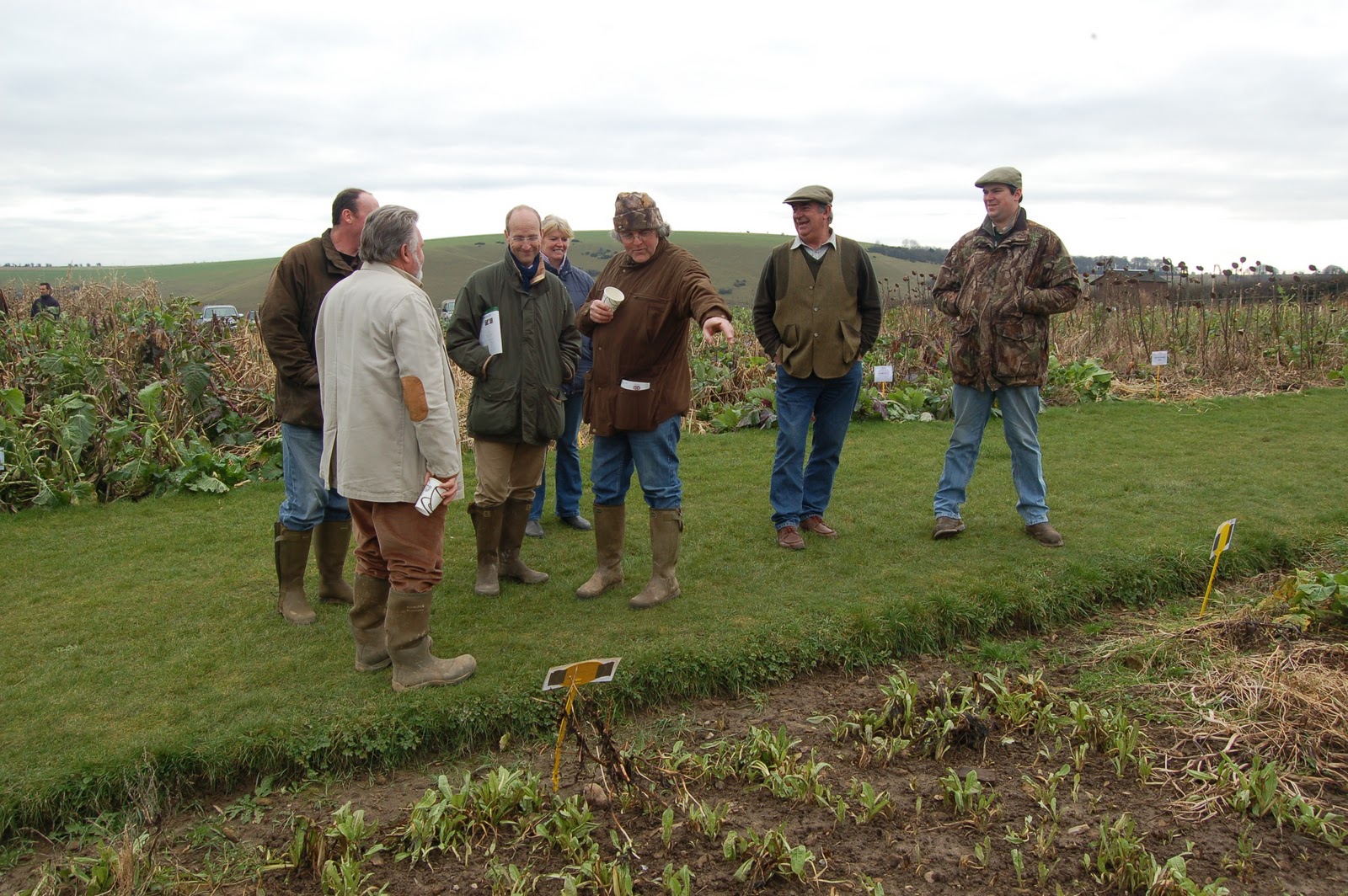
On the 21st September we organised a farm walk to look at how our Higher level Stewardship options can be used on a modern farming business to increase habitats for our farmland species. The walk was jointly organised by FWAG (Farming and Wildlife Advisory Group, the CLA (Country Land and Business Association) and GWCT (Game and Wildlife Conservation Trust.

The title for the invitation was Hare's, Hairstreak's and Harebells, which basically meant, animals/birds, plants and insects.

The tour started with a brief introduction then it was off on the trailers around the farm.  Our first stop was with Peter Thompson from the GWCT who was telling us about the benefits of pollen and nectar strips and wild bird food.  This strip looked great with the pollen and nectar providing insect food which could then be fed on by young birds, especially grey partridge chicks.  We haven't seen grey partridge on the farm for a few a years so I am hopeful that with these areas dotted around the farm we could see their return!  Peter also demonstrated the wild bird mixture planted adjacent to the pollen mix.  This he descibed as a 'bird table ready for winter'.  He's quite correct with the quinoa, millet, triticale present it should really attract the small birds through the winter, when the hedgrows and woodlands have run out of food.  The combination of these two mixes with the hedge and grass verge provide the three crital requirements of our farmland birds, nesting habitat (hedge/tussocky grasses), chick feed (Pollen and nectar) and adult winter food (bird table).
After this stop we headed out up the hill for some fresh air and a leg stretch to learn about beetle banks.  Click HERE to listen to Peter again telling us of the vital role these habitats can play in conservation.  They are also a good way to help friendly beneficials get further into our fields to help control aphids!

After this stop we loaded up again and headed to another area of the farm were we are maintaining species rich limestone grassland.  The sheep are helping to graze this vital habitat where grass and wild flowers have regenerated the fields after being in arable production.  On the way around we managed to spot a brown hare and also some harebells so as Meat Loaf would tell you , 2 out of 3 ain't bad.  A huge thankyou to our speakers, Bob Slater from FWAG, Matt Willmott from Natural England and Peter Thompson from GWCT who made this a real enjoyable farm tour to be a part of and for teaching me something new!

Monday, 26 September 2011

Stewardship Update

I thought that I would just take a quick moment to update you on how the various stewardship options have progressed over the dry summer.  On the whole most seemed to have coped very well although some species have rather taken over!  This first wild bird seed mixture is the Norlands field and was planted with feeding Tree Sparrows through the winter months.  The plants include the wonderful Quinoa whose magnificent autumn colours look a real picture at this time of year.  They will produce a vast amount of small seeds from Christmas onwards.

In this field we have planted a pollen and nectar strip next to a winter bird seed mixture aimed at providing nesting cover and food for corn buntings. The mustard that we planted seems to have overtaken the rest of the seed mix which includes, spring barley, triticale and white millet.  Next year I think I will reduce the mixture from 10 to 5%, although who knows in a different spring 10% might have been the right amount.


This is one of my favourite stewardship margins and one that has already produced a real bounty of winter food.  Both of these mixtures were planted before we entered the Higher Level Stewardship and last year the bird food mix fed lots of small birds, including yellow hammers, dunocks and linnets through the winter period.  What I love about this combination of pollen and nectar and wild bird food is the way that it caters for our farmland wildlife completely.  It provides winter food for adult bird survival, pollen and nectar for insects to live on which then become chick feed and there are nesting sites in the tussocky grass margins and hedge bottom on the right hand side.  It will be fascinating to watch these sights develop over time and hopefully reap the benefits for our farmland wildlife.

Tuesday, 19 July 2011

Orchard Exploration

On Monday the 18th July we held the first group meeting of the Overbury and Conderton Orchard Group.  The idea is to bring together interesed members of the two villages to talk about the conservation of the old traditional orchard and to find out if there was any interest in helping with the restoration.  The turnout was terrific, Denzil counted 50 people present and we had a least 2 families that could not make it!  Penelope introduced the evening then John Clarke spoke about his experience with the Kemerton Orchard Group before I spoke about the wider Higher Level Stewardship options that we are embracing on the farm.  Eventaully, it is hoped that the orchard group could become self sufficient in the management of the orchard (complying with the HLS scheme rules-obviously) interacting with the farm's requirements of the orchard, for grazing. 

The group will then have the opportunity to develop the conservation within the orchard, looking at erecting bird boxes, bird, plant and moss identification and counting, maybe even having some community bee hives.

It is hoped to organise a follow up meeting, within two weeks to establish a name and committee structure to start leading the plans forward.  I think we will be starting up with a fruit collecting day in September, ready for winter supplies of jiuce and cider, before tree prunning and planting weekend days following up in the winter.  Keep up to date with the development of the group through this blog and the farm facebook page 

Thursday, 10 March 2011

Archaeological Anticipation

Over the past month we have been paying special attention to one of our Scheduled Ancient Monuments (SAM) right on the summit of Bredon Hill.  The Kemerton Hill Fort is thought to be about 2700 years old and was built in the Iron Age period of time.

Over the years the field has changed with some quarrying taking place, to provide local stone, maybe for houses or stone walling.  As a result we have an area of erosion, where the land has slipped away.

The erosion was uncovering some very interesting changes in soil type, colouring and even an old bone or two.  The erosion here has been caused by heavy rain, sheep movements and general wear and tear.  The dark area of soil (left) is thought to be a hole for a post, maybe a fence for corraling cattle or even part of a house.  There are other areas of the hill fort that are suffering from erosion by mountain bikes, (we will tackle these bits another day). 

Under our HLS agreement we have secured some funding to repair the erosion scar's, thus protecting the archaeology for future generations.  Adam (Worcester Archaeological Service) was  employed as part of the repair to survey and record what was being uncovered, before the face was sealed up again.  GPS measurements, readings and photographs where all taken as an official record of the event.


After the excavations had been completed the repair work could begin!  Leigh Watts, who is a local landscape gardner, was detailed with the prescription to repair, as detailed by English Heritage.

Stone from the quarry was used to build up the main layer and the final dressing of soil was collected from within the field boundary, by collecting up mole hill dirt!  We actually collected a JCB bucket load, it took a while but luckily the moles obliged!  This dirt was then spread over the stones and within a plastic mesh to stop further erosion until grass can establish.  The grass seed will be collected later this year again from within the field boundary, although I'm sure there will be some seed from within the mole hill dirt that will start the process off.  The sheep netting is a temporary boundary to stop unwanted feet and mouths disturbing the fresh soil.  The final picture shows the half compeleted repair but you will be glad to know that it is now fully restored!

Monday, 31 January 2011

Stone Wall Regeneration

One of the really great aspects of our Higher Level Stewardship agreement is the additional help and funding to repair some of our worst stone walls.  Many of the walls were erected in the 1920's during the great depression, where labour was cheap and the raw materials were available within the fields or dug up from the on farm quarries.  Now after nearly 100 years of rain, snow, frost and sunshine damage some are really starting to show their age and in need of repair. The frost damage really causes the damage where the walls sag and can't shed the water allowing it to seep into the centre of the wall where is freezes and thaws, gradually causing the stones to crumble and the wall to collapse.
Stone walling is a very skilled and papainstakingly slow operation hence the large costs involved in restoration.  A typical wall, if you are using a proportion of new stone will cost somewhere in the region of £100/meter.  This would include the toppers and the top wire used to try and keep the deer from leaping over the wall knocking it down.  Our walls are being repaired by Matthew Fergyson who is based at Guiting Power.  This is Nathan, who works with Matthew, who has stripped down a section of wall and is now rebuilding it.  The almost final result is shown below, (minus the top wires)
For those of yo who regularly walk on Bredon Hill this wall is located near Sundial barn, shown above.   The wall is about 450m long and runs along side a public footpath, so you are welcome to go and see the progress for yourselves.  You might even give Matthew and Nathan some encouragement as they are there is all weathers!

Monday, 24 January 2011

Seed Selection


Today Paul Gillet and I went to see some game cover and stewardship seed mixtures sold by David Bright Seeds  Paul is the Head Keeper at Overbury and together we wanted to go down and have a look at different mixes of seed after the hard winter weather we have been having.  This would help us determine if there are any new varieties or species we should be trying that will stand up better to the cold weather.
Much of the grain maize was still standing, as was the cobless maize but much of the forage maize was flat.  We looked at varieties of sorghum, millet (red and white), kale, mustard, turnips and a host of other species of planted, all designed to either feed or provide cover (shelter) for game birds, with benefits to other species.

Having just been accepted into the Higher Level Stewardship Scheme, I was keen to look at different seed mixtures aimed at providing feed and cover for our 6 target wild birds (Grey Partridge, Lapwing, Turtle-dove, Skylark, Yellow Wagtail and Trees sparrow).  We saw mixes for yellow hammer and tree sparrow, both of which we have tried here at Overbury, containing mustard, mixed millet, spring wheat, spring barley and fodder raddish.  Lots to think about and plan for ready for planting this spring.

Thursday, 20 January 2011

Green Light for High Level Stewardship

Some good news to share with you all in the New Year.  Our Entry and Higher Level Stewardship application seems to have ticked all of the right boxes and has been given a January 1st 2011 start date.  From this moment we are putting the scheme into operation.  It is a great challenge but it will be so rewarding, not just for us, but for the people that visit our farm, those that walk on Bredon Hill and also for the wildlife we can support, attract and encourage.  I hope that the visitors and walkers will be able to appreciate what we are doing and play their part by keeping to the public rights of way and following the countryside code 

A huge thank you to the organizations that lobbied on our behalf, those at FWAG and LEAF the NFU and the CLA also Farmers Weekly for their write up in the 29th October edition.  I would also like to thank Harriet Baldwin MP and Jim Paice MP for their support.  The only omission from our scheme is the removal of funding for our educational access visits and the open access.  These are two areas that really need support to encourage people to learn about their food, farming and the countryside on which we depend on for our living.

So it's full steam ahead, and as of this moment we have started work on our Orchard Management Plan.  Rob Howells our local FWAG Farm Conservation Officer has started mapping and categorizing the trees currently in place.  From this survey we will be able to work out a plan for planting and pruning over the next 5 years.  Later this year we will start to identify those trees and if possible start replanting trees next winter.
Here is Rob in the Cherry Orchard assessing the condition of some very old Cherry trees that could someday soon be some of the first trees to be restored under our High Level Stewardship agreement.


Wednesday, 27 October 2010

HLS Renamed as Hopelessly Lost Scheme

Well the title says it all!!  Forgive me for this blog but its been a week brewin' and a stewin' and there are no fancy video's put to music, for if there were I would be struck off!  In summary 2 years of vists, meetings, planning and at least £60,000 of Natural Englands funds spent to date and we are no further forward, he's more....

Over 2 years ago we could see the termination of our Countryside Stewardship Agreement and Entry levels Stewardship happening on the 30th September 2010. Natural England (NE) had European funding and were willing farmers to take up HLS options on their farmland.  We got NE involved from day one to work together from the onset of the scheme to deliver the optimum benefits for the farm business and our environment.  We studied hard, did the Farm Environmental Plan (FEP) looked at our natural biodiversity, paid for bird surveys and helped out in the COSMIC study to assess our archaeological credentials to get into the scheme (see earlier blogs).  This has helped future schemes assess the risks to archaeology much more effectively i.e cheaper, faster and more accurately.   All of this has taken up considerable time and funding.  At last the joint ELS/HLS application was drawn together and handed in on the 17th June 2010.

Our scheme covered, in summary, all of NE targets and then some...SSSI Calcareous grassland, Orchards plans, species rich grassland, woodland pasture, extensive heritage sites, including 5 SAM's (scheduled Ancient Monuments), arable bird options, arable plant options, open access, educational visits, the list goes on.

During harvest we had an onsite meeting and everything was going to plan, only one meeting required as the NE staff knew exactly what we were planning to do.  The overall scheme was included in this years NE budget and the capital works were budgeted for over the next 5 years.  Busy schedules and the inevitable computer delays meant that the date slipped into October.  Computer delays that are of the Rural land Registry's doing, this parcel number doesn't match that number or this code doesn't match another code. 

Then came the 20th October- meaning the scheme needed to be signed, sealed and delivered.  It was added to the computer after it locked out a few times and was ready to sign on the Tuesday (19th).  Then, wait for it, there was no-one senior enough to actually sign it off.  Just for clarity and in case you didn't hear that bit, It was sitting there ready to sign.  Had it been a smaller scheme it would have gone through.  So discrimination is rife at Natural England, size really does matter! So in our case it's the bigger schemes with more diverse habitat that will actually deliver the best results and be more efficient with the funding, that get penalised.  In our case having already had 10 years in CSS and 5 years in ELS. 

I attended the Sainsbury's 'Farming for the Future Conference' on Friday at Stoneleigh Park, where Jim Paice (Minister for Agriculture and Food) was delivering a speech so I managed to have a few words afterwards.  I will let you know the outcome of his findings when I get them.  I hope he will be able to pass on the concerns to Caroline Spelman, Secretary of state for DEFRA, mind you a letter will be on it's way as well, I don't expect she will be reading my blog!

Where to now?  NE are saying wait until 1st April but what happens then?  Will there be any funding?  How much and will it fit into our farming business.  NE don't know and I don't know the answers but I do know that whatever trust there was between this farmer and NE (policy makers) has gone in the same direction as the Dodo and there's no scheme around today to bring him back.

Tuesday, 6 July 2010

Millbank Trials

The field photographed is hosting our trial areas for wild bird seeds as part of the impending HLS scheme. It was planted in April with a wide variety of plants aimed at producing wild bird feed through the winter. the mix included mustard, fodder radish, kale, linseed, sunflowers, millet and we added some spring barley just for good measure.
Despite the dry summer the crop got off to a great start, fending off most of the pigeons eyeing up the juicy seedlings, mainly the sunflowers and kale. The flee beetles and the pollen beetles also had a go but a timely insecticide brought them to a swift end. What has amazed me is the diverse insect life that is benefiting from the plants in flower. I walked into the crop this morning to find bumblebees, honey bees, butterflies, spiders, ladybirds, hoverflies and many other hungry beasties all feasting on the pollen. I was really pleased about this, an uncalculated but not unsurprising benefit.
We need more farmers to take up these options as part of Campaign for the Farmed Environment, it wasn't that expensive to establish, it might last two years, with the kale surviving, and the benefits to general farm biodiversity will be enormous.

Friday, 28 May 2010

Beetling About

Earlier this year we decided to plough up about 0.5ha of winter beans in order to establish a beetle bank and some extra winter bird mix area. The beetle bank will protect the wild bird feed area, incorporating a game strip from the activities going on in the field. I walked up and down the strip hand sowing grasses such as Timothy and Cocksfoot which will provide a great nesting habitat for the birds. The beetle bank as it's name suggests will also provide a wonderful home for many beetles and insects which in turn will provide food for creatures higher up the food chain. This mixture is called 'Yellow hammer Mix' and includes, mustard, spring wheat, mixed millet, triticale, spring barley and fodder radish. It will of coarse provide food for many more birds not just the Yellow Hammers.

The reason for this trial is to learn about growing these mixed crops as we are preparing our HLS scheme application which will include some areas of the farm dedicated to growing crops to feed birds. Now all we need is some nice warm rain to get the crops established!

Thursday, 29 April 2010

Arable Bird Survey


Today I went out on our arable bird survey walk around with John Clarke and his wife Pamela. The walk takes us to 3 areas of the farm, that we walk through about 3 times a year to see what bird species we are able to identify. We are specifically looking for farmland bird species including; skylark, lapwing, yellow hammer, turtle dove, but all species of note are recorded. Today we spotted; skylark, lapwing, reed warblers, black caps, sedge warblers, reed buntings, yellow hammers (on our cultivated margin- result) linnets and a few others. These records should help us in collating information to enhance our HLS (Higher Level Stewardship ) application at the end of May.
Today we had a brilliant find in one of the fields Pamela actually discovered a skylark nest which is amazing. I found one about 5 years ago and have waited to find another since then. We have always had skylark but locating the nests is very rare, so it was a complete joy to find one today and here it is for you to take a peak at. Here is a shot of a lapwing on patrol near a nest in one of the sites we manage specifically for this species, very rare in Worcestershire.


Friday, 5 February 2010

X-Ray Spectacular

Darren has very kindly sent me the Geo-Physics resulting scans for a couple of the fields on the farm. The field shown here has got some very interesting features and it was the first field that Gordon dug trenches in earlier in the week. The black and white line through the middle of the fields is a crop mark, shown up in aerial photographs over the years. Adjacent to this on the right is the bunded area uses as a coral (see other blog) The line is actually a trackway. The geo-fizz info is shown by the red and blue areas to the right of the trackway and show the actual ditches and mounds of earth and lots of small pits and other features. It is great to see that these areas are still in tact after years of farming practises and we're now looking forward as to how we can protect them for future generations.

Sunday, 13 December 2009

Taking it to a Higher Level


As part of the on going investigations as to whether we should be getting involved in the Higher Level Stewardship a team of archaeologists have been looking at the farms archaeology. They have been trialing a system called 'COSMIC' which is based on a risk assessment to the archaeology. The study looks at each of the sights on the farm and tries to work out whether or not the current or past farming practices have or will put the archaeology in danger. The study looks at the field slope, soil depth, passed cropping and passed cultivation techniques to work out the potential risk. It also looks at futures plans for cropping and cultivation. The the system is then taken outside and hand dug test pits are dug to test the theory from the office. So far most of the test pits have come up with plenty of protection for the archaeology and no harm has been done through the farming practices. We will await the final report as the team still have a few sites left to look at. It any of the sites are shown to be at risk we may have to think about putting an HLS option on that land to protect it. These options could include using minimum tillage establishment techniques or grassing the field down in the most at risk cases. We wait to see! The test pit here is in a field of beans where they were looking to find an old roadway and various enclosures. the darker soil is the cultivation depth and the lighter soil is the subsoil, going down further in the top left corner goes even further down to the base rock layer where the archaeology would be found. In this scenario there is plenty of soil to buffer the archaeology from any of our farming operations.

Monday, 28 September 2009

ELS -Food for Thought

Today, with the majority of the wheat drilling completed I was able to turn my attention to our Entry Level Stewardship application. Our current scheme expires in November 2010, was it really four years ago I did the last one? My plans are to have the new scheme, ELS and HLS combined up and running by this current spring, which will allow us the summer months to establish a lot of margins. Currently many of these margins are planted to a width of 2m but with increasing pressure around areas of population and a potential for us to loose certain chemicals it would be prudent to protect our operation for as long as possible and if we can get paid as well then that could be a bonus before legislation might force our hand. Chemical loss, such as Metaldyde will severely impact on our business here at Overbury. Wider margins will help reduce any soil erosion run-off, taking chemical particles with them into the water courses. Coupled with the margins I am also looking at some pollen and nectar mixes to provide feed sources for insects, which in turn will provide feed for small birds. The ELS scheme should provide us with a backbone with which to hang an HLS application on with a lot more options and interesting projects to get involved with.